
Perceptual and Adaptive Learning in Medicine
Medical practice requires pattern recognition in the interpretation of many types of clinical presentations, such as recognizing key features in a patient’s narrative to diagnosing cardiac problems based on such features as heart sounds, an EKG tracing, clinical laboratory results, or a cardiac ultrasound scan. Although the guidelines for making such interpretations are taught in the course of medical school and residency, proficiency in clinical interpretation is primarily gained via experience, which frequently involves clinical practice over many months or years, since the actual presentations of features varies widely from person to person.
We have created a large number online training modules (perceptual and adaptive learning modules, or PALMs) that incorporate both perceptual learning (PL) and adaptive response-time sequencing (ARTS) in order to accelerate both accuracy and fluency (automaticity) in interpreting clinical information. Importantly, we have found that PALM training leads to dramatic improvements in both short- and long-term proficiency.
These PALMs are currently being employed in a variety of health-related settings, from training medical students to active practitioners, making their development of both applied and theoretical importance. The availability of a large number of trainees using PALMs make these modules ideal for projects aimed at identifying factors that optimize learning technologies. A few examples of possible research questions to pursue are —
Variations in presentation mode that might affect learning and retention:
- Are multiple-choice answers vs. “click on” a particular feature approaches equally useful?
- How well does learning from each approach generalize to the other approach?
- Does intermixing approaches benefit learning speed, retention, and/or generalization?
Factors that predict optimal sequencing and spacing:
- What is the optimum spacing of category exemplars?
- Does this vary with learning difficulty?
- Can we predict optimal long-term “refresher” times from an individual’s PALM learning outcomes?
Individual differences in types of perceptual learning performance:
- Does perceptual learning performance correlate with that for declarative learning?
- Do individual differences in perceptual learning performance vary with the nature of the learning stimuli (e.g., visual vs. auditory)?
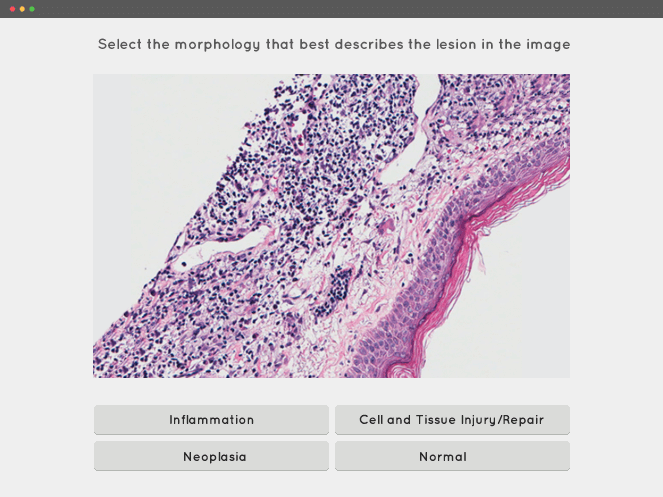
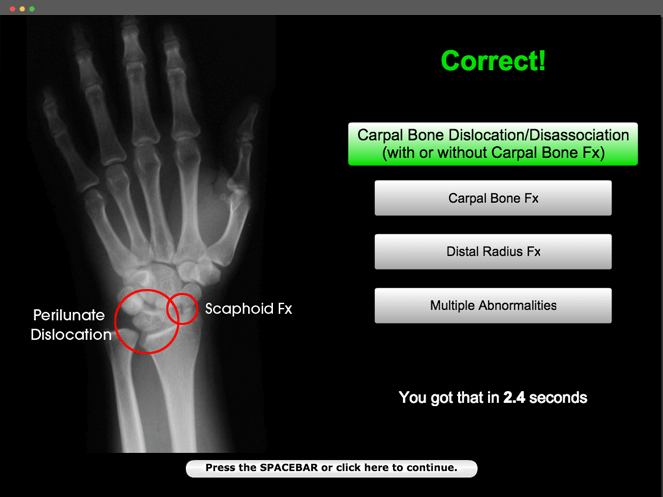
Examples of Learning Modules
Researchers

Philip J. Kellman

Everett Mettler

Tim Burke
Collaborators

Sally Krasne (UCLA)

Erik Dutson (UCLA)
Cheryl Hein (UCLA)
Selected Publications
- Jacoby, V. L., Massey, C. M., & Kellman, P. J. (2024). Target vs. distractor: Does the role of a category in comparisons influence learning? Evidence from skin cancer classification. In Proceedings of the Annual Meeting of the Cognitive Science Society (Vol. 46).
- Ahmad, T.R., Ashraf, D.C., Kellman, P.J., Krasne, S. and Ramanathan, S. (2024). Training visual pattern recognition in ophthalmology using a perceptual and adaptive learning module. Canadian Journal of Ophthalmology, Vol. 59, 2, e135-e141.
- Kellman, P. J., Massey, C. M., Krasne, S. & Mettler, E. (2023). Connecting adaptive perceptual learning and signal detection theory in skin cancer screening. In M. Goldwater, F. K. Anggoro, B. K. Hayes, & D. C. Ong (Eds.), Proceedings of the 45th Annual Conference of the Cognitive Science Society, 3251-3258.
- DiGirolamo, G.J., DiDominica, M., Qadri, M.A., Kellman, P.J., Krasne, S., Massey, C. and Rosen, M.P. (2023). Multiple expressions of “expert” abnormality gist in novices following perceptual learning. Cognitive Research: Principles and Implications, 8:10, 1-14. https://doi.org/10.1186/s41235-023-00462-5.
- Jacoby, V., Massey, C.M., Mettler, E.M., & Kellman, P.J. (2022). Comparisons in adaptive perceptual category learning. In J. Culbertson, A. Perfors, H. Rabagliati & V. Ramenzoni (Eds.), Proceedings of the 44th Annual Conference of the Cognitive Science Society, 2372-2378.
- Slaught, C., Madu, P., Chang, A., Williams, V., Kebaetse, M., Nkomazana, O., Molefe-Baikai, J., Bekele, N., Omech, B., Kellman, P., Krasne, S. & Kovarik, C. (2022). Novel education modules addressing the underrepresentation of skin of color in dermatology training. Journal of Cutaneous Medicine and Surgery, 26(1), 17-24.
- Kellman, P.J., Jacoby, V., Massey, C., Krasne, S. (2022) Perceptual Learning, Adaptive Learning, and Gamification: Educational Technologies for Pattern Recognition, Problem Solving, and Knowledge Retention in Medical Learning. In: Witchel, H.J., Lee, M.W. (eds) Technologies in Biomedical and Life Sciences Education. Methods in Physiology. (pp. 135-166). Springer, Cham. https://doi.org/10.1007/978-3-030-95633-2_5
- Aycock, M. M., Marker, C. D., & Kellman, P. J. (2021). Evaluating the use of supplemental training technologies in dermatology education. Journal of Dermatology for Physician Assistants, 15(4), 16-23.
- Krasne, S., Stevens, C. D., Kellman, P. J., & Niemann, J. T. (2020). Mastering electrocardiogram interpretation skills through a perceptual and adaptive learning module. Academic Emergency Medicine Education and Training. doi: 10.1002/aet2.10454
- Kellman, P. J., & Krasne, S. (2018). Accelerating expertise: Perceptual and adaptive learning technology in medical learning. Medical Teacher, 40(8), 797-802. doi: 10.1080/0142159X.2018.1484897
- Romito, B. T., Krasne, S., Kellman, P. J., & Dhillon, A. (2016). The impact of a perceptual and adaptive learning module on transoesophageal echocardiography interpretation by anaesthesiology residents. British Journal of Anaesthesia, 117(4), 477–481. doi: 10.1093/bja/aew295
- Thai, K. P., Krasne, S., & Kellman, P. J. (2015). Adaptive perceptual learning in electrocardiography: The synergy of passive and active classification. Proceedings of the 37th Annual Conference of the Cognitive Science Society. Austin, TX: Cognitive Science Society.
- Rimoin, L., Altieri, L., Craft, N., Krasne, S., & Kellman, P. J. (2015). Training pattern recognition of skin lesion morphology, configuration, and distribution. Journal of the American Academy of Dermatology, 72(3), 489-495.
- Krasne, S., Hillman, J. D., Kellman, P. J. & Drake, T. A. (2013). Applying perceptual and adaptive learning techniques for teaching introductory histopathology. Journal of Pathology Informatics, 4, 34-41.
- Kellman, P. J. (2013). Adaptive and perceptual learning technologies in medical education and training. [Supplement issue.] Military Medicine, 178, 98-106.